Tikoil, the Alpona Village of Chapainawabganj: Painted Mud Houses, Daykhon Barman and How to Get There
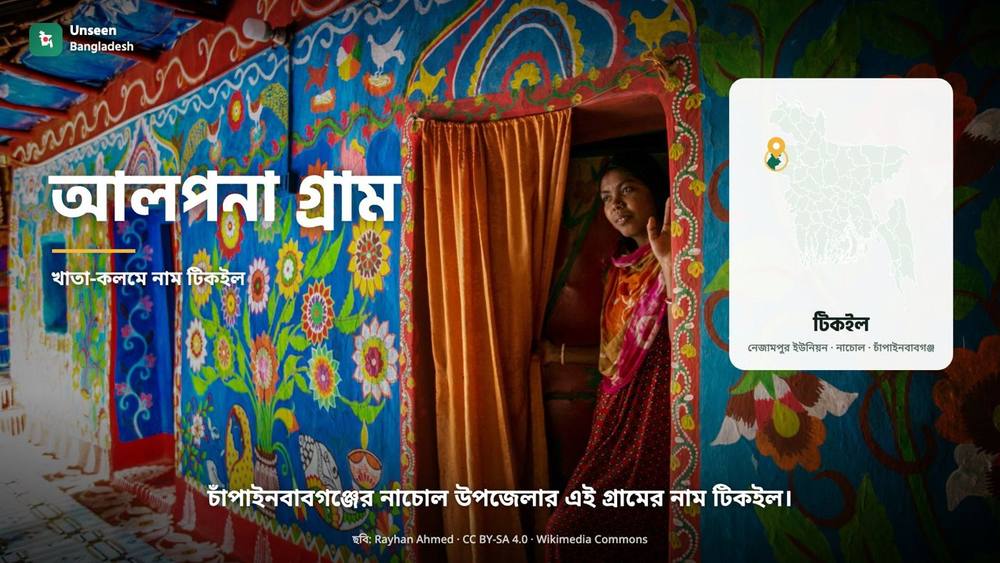
On paper it is Tikoil; everyone calls it the Alpona Village. In this village in Nachole, Chapainawabganj, the walls of mud houses are covered in flowers, birds and vines. How Daykhon Barman began it, where the colours come from, the best time to see it and how to get there. With our new video.

- Where
- Tikoil, Nejampur union, Nachole, Chapainawabganj
- Known as
- Alpona Village (আলপনা গ্রাম)
- Who paints
- Mostly the village's women and girls
- Best time
- Winter, and just after Durga Puja, Lakshmi Puja or Pohela Boishakh, when the paint is fresh
- Stay
- In Chapainawabganj town
Trip ticket
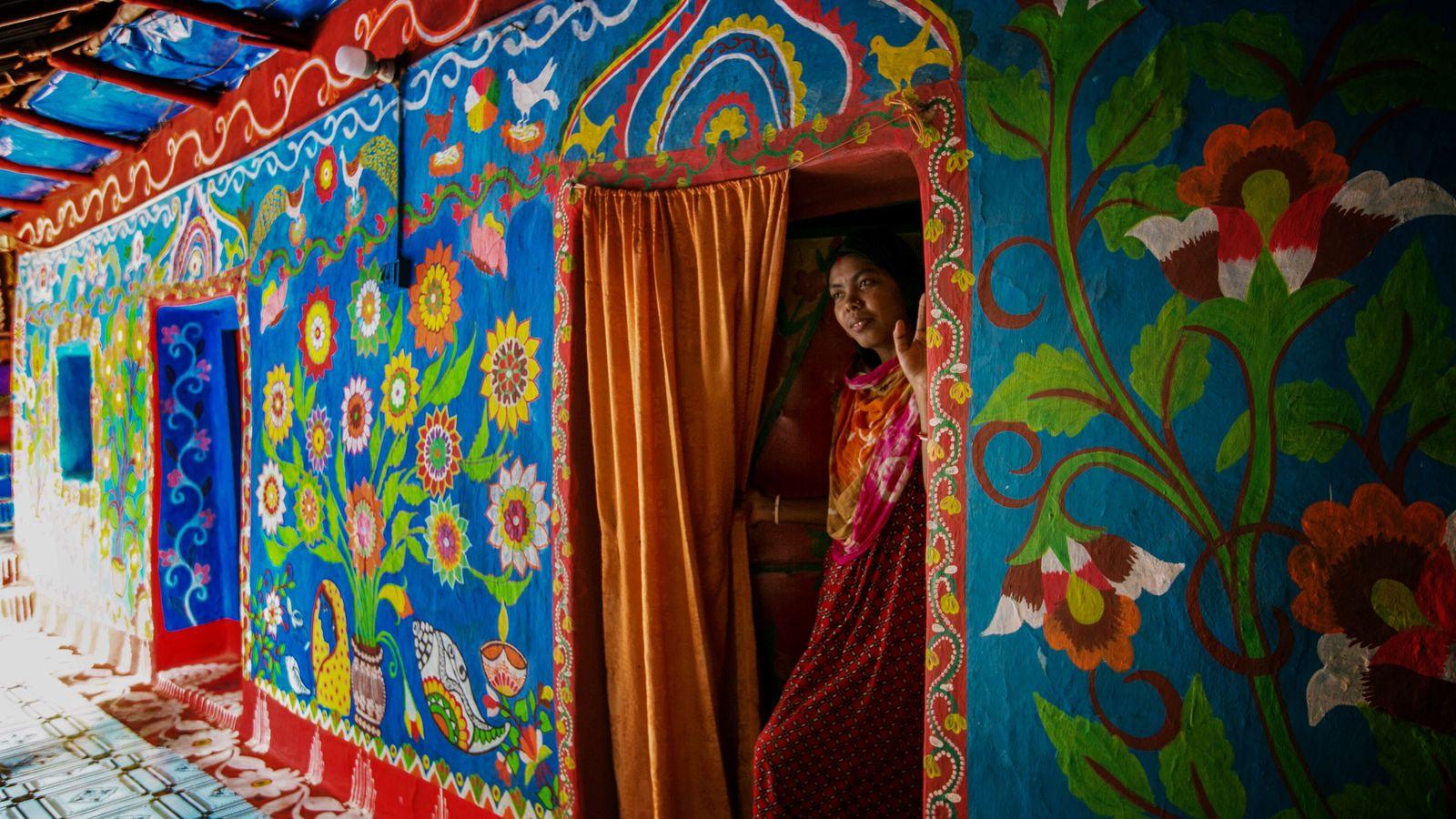
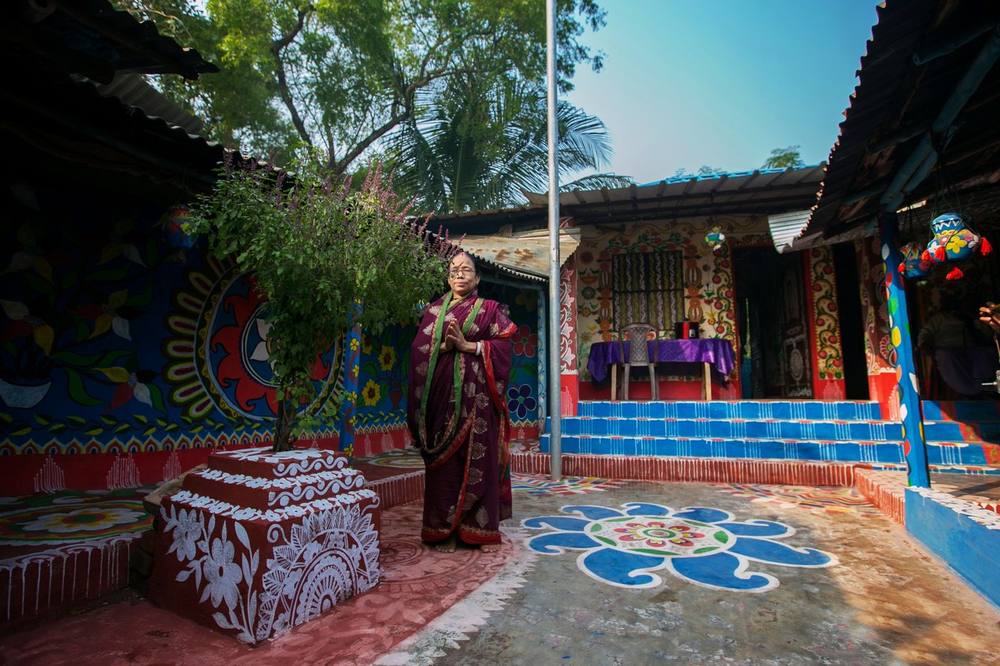
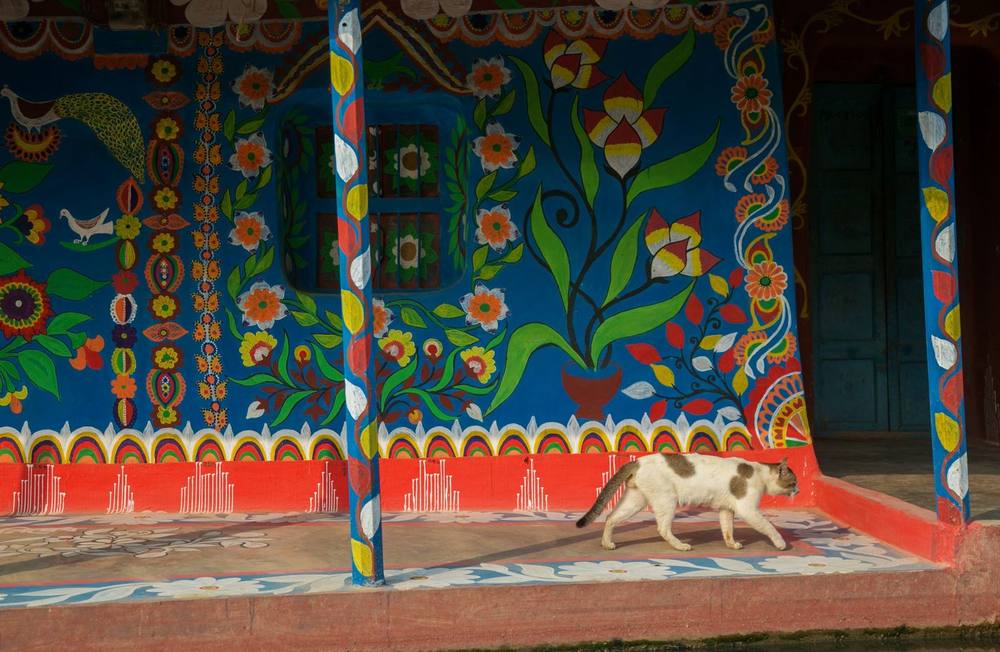
Follow the red Barind soil towards Nachole and, in one village, the colours suddenly change. The walls of the mud houses are covered in flowers, birds and vines, here a boat, there a poet's face. On paper the village is called Tikoil, but people in Chapainawabganj, and now across the country, know it as the "Alpona Village".
This post tells Tikoil's story: how an old ritual became today's painted village, where the colours come from, who paints them, and how to visit and what to keep in mind when you do.
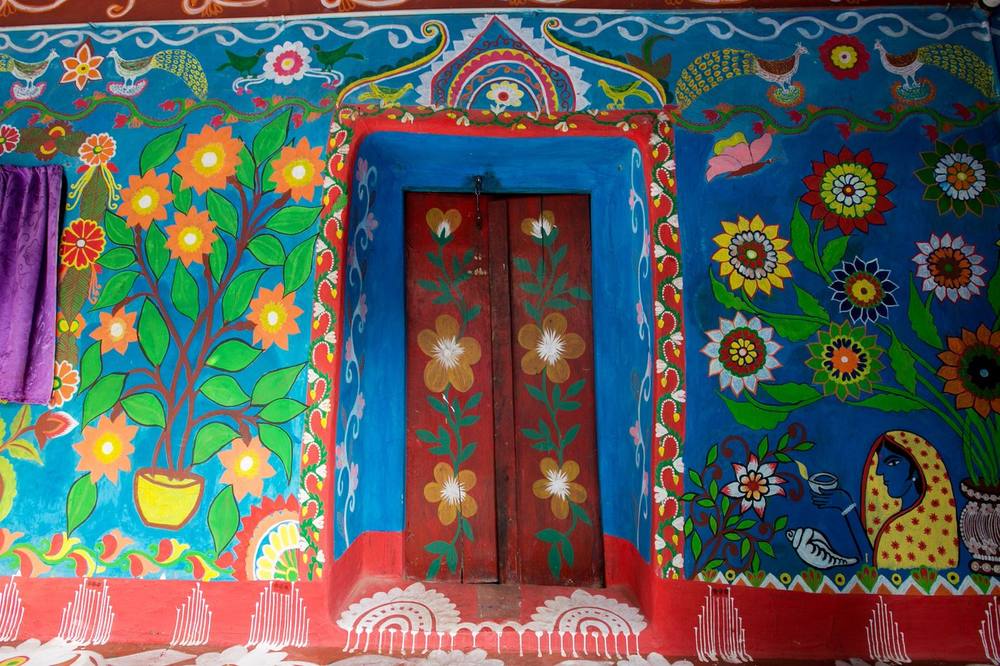
Where Tikoil is
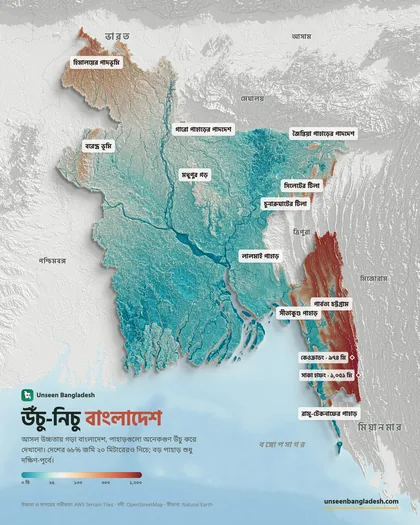
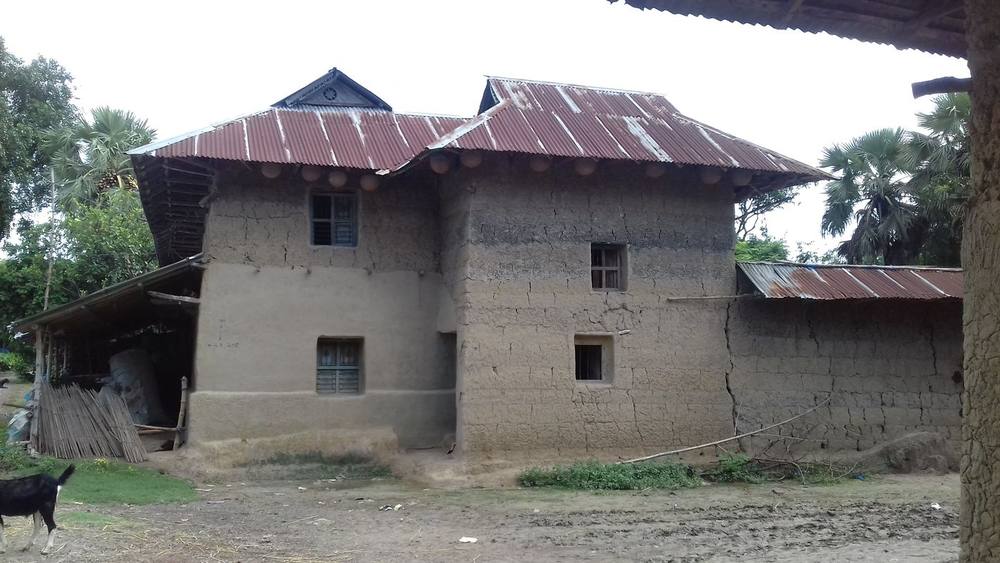
Tikoil is a village in Nejampur union of Nachole upazila in Chapainawabganj district, north-east of the district town and north of Hatbakoil bazaar. This is the Barind tract, a land of red and sticky clay soil, and the old houses here are built from that same soil.
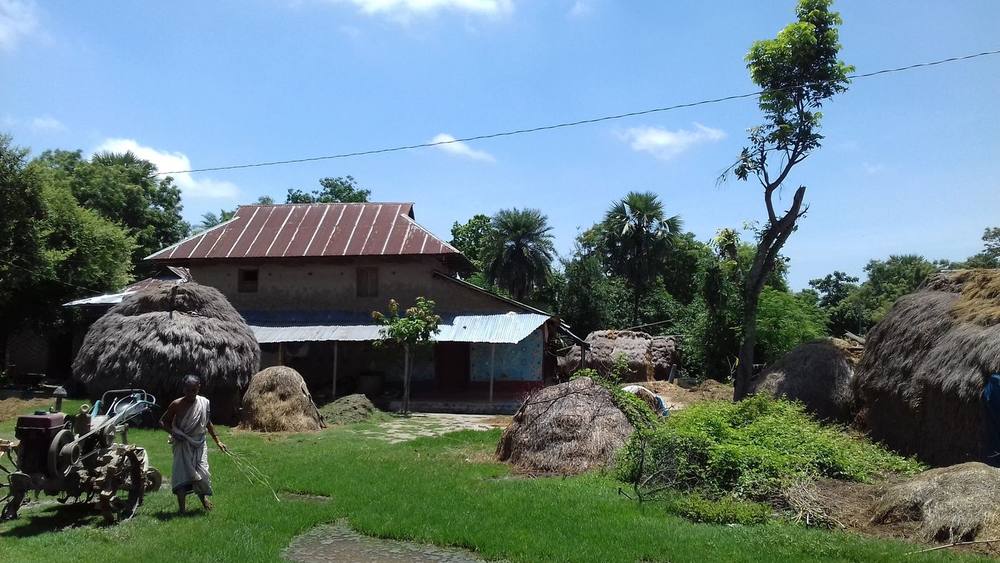
Many people know the name Nachole for another reason too: the 1950 Nachole peasant uprising and its leader Ila Mitra. Her portrait is painted on a wall in Tikoil as well.
The older tradition
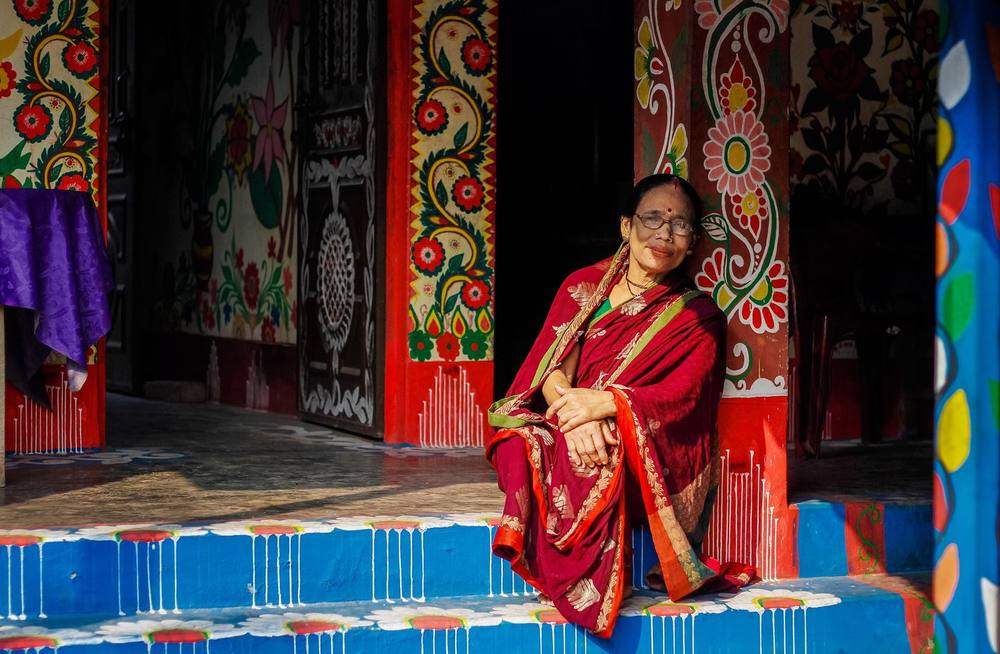
Alpona (also written alpana) is one of Bengal's oldest folk arts. Tikoil's Hindu families painted dots and lines of white and red on their mud walls for pujas and decorated the tulsi (holy basil) altar. No one can say exactly when this began; villagers say it has come down from their ancestors. It is said that a bride's skill was once judged by the alpona in her home.
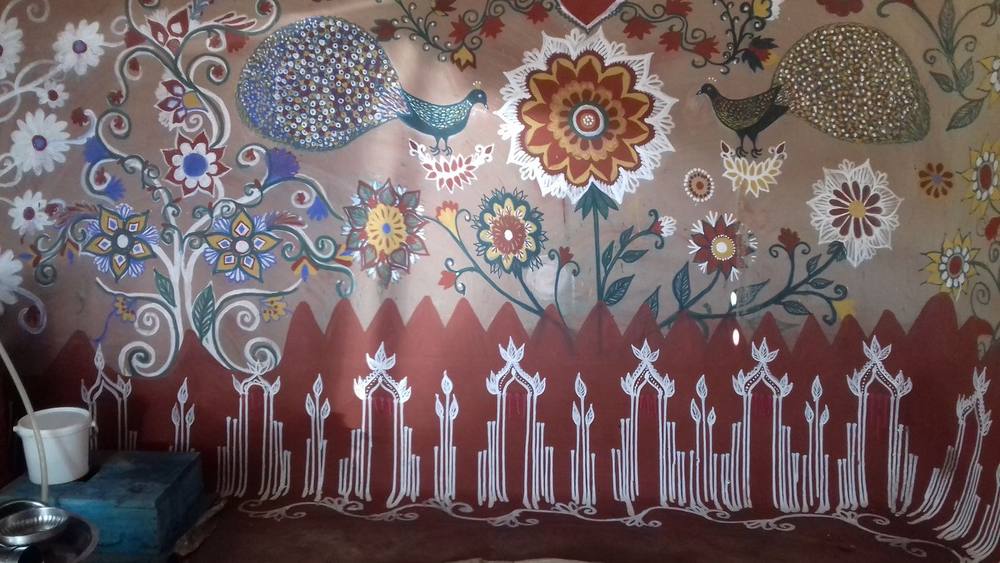
Daykhon Barman: the woman who coloured a village
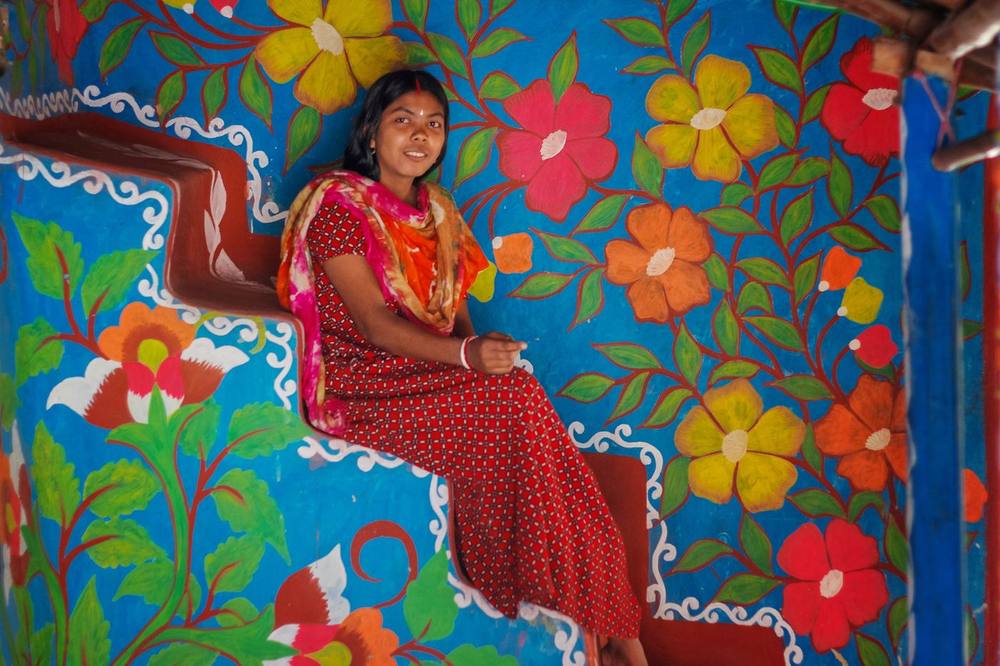
About four decades ago, Daykhon Barman (also written Dekhon Bala Barman) came to Tikoil as a twelve-year-old bride. The same white and red patterns on every wall felt dull to her, so she painted a rainbow, then flowers, trees and birds. In her own words, she began simply to make her home beautiful.
People started coming to see her house, and neighbouring women learned from her and began painting their own homes, then their daughters did too. That is how the colourful alpona spread from one house to the whole village. Her home is now known as the "Alpona Bari" (alpona house), and the district administration has honoured her as the pioneer of the village's alpona.
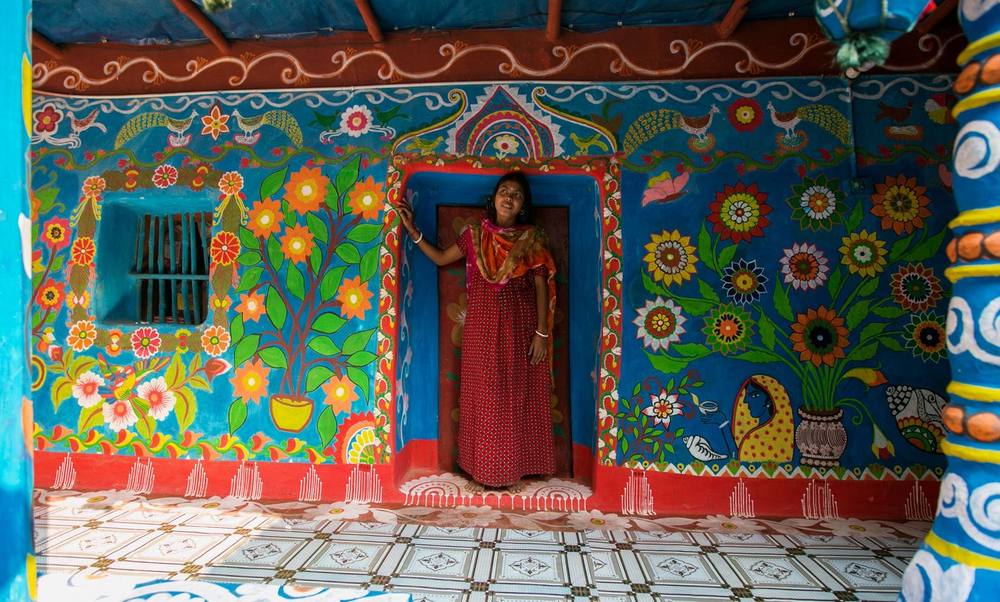
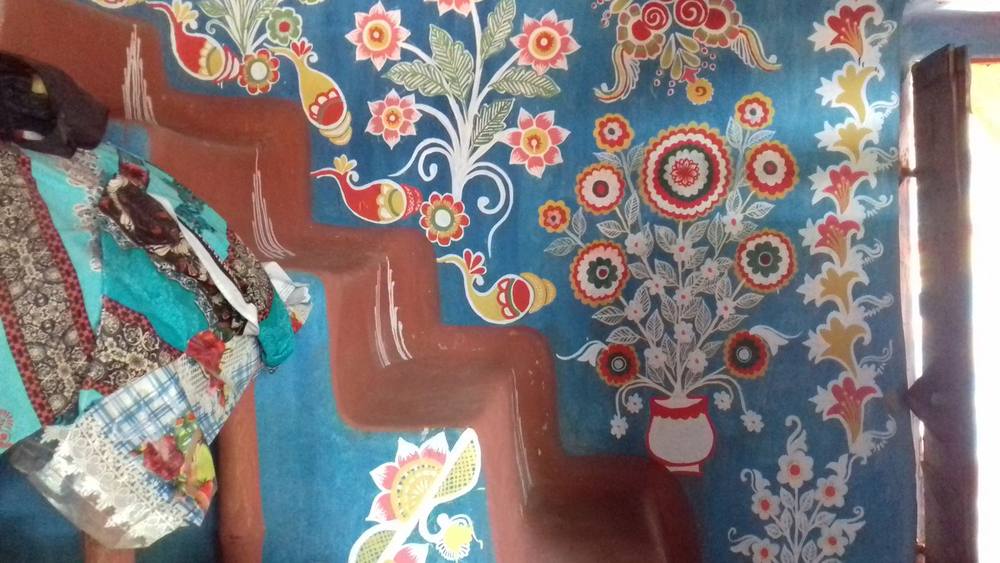
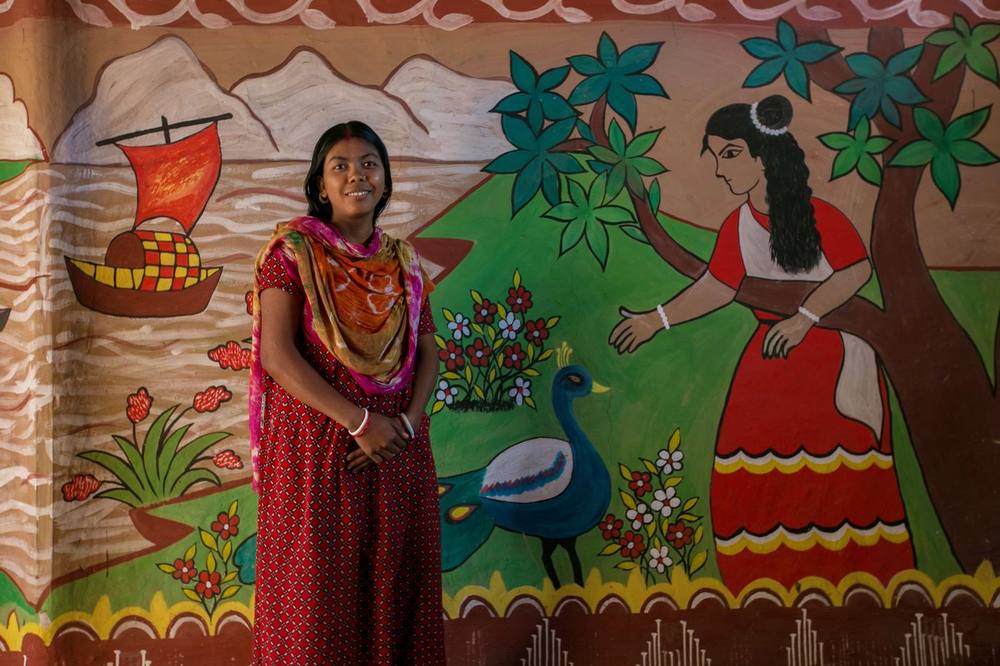
There is no art school here. Grandmothers teach granddaughters and mothers teach daughters. Nearly all the painting is done by women, though in many homes the men now lend a hand.
Colours from the soil
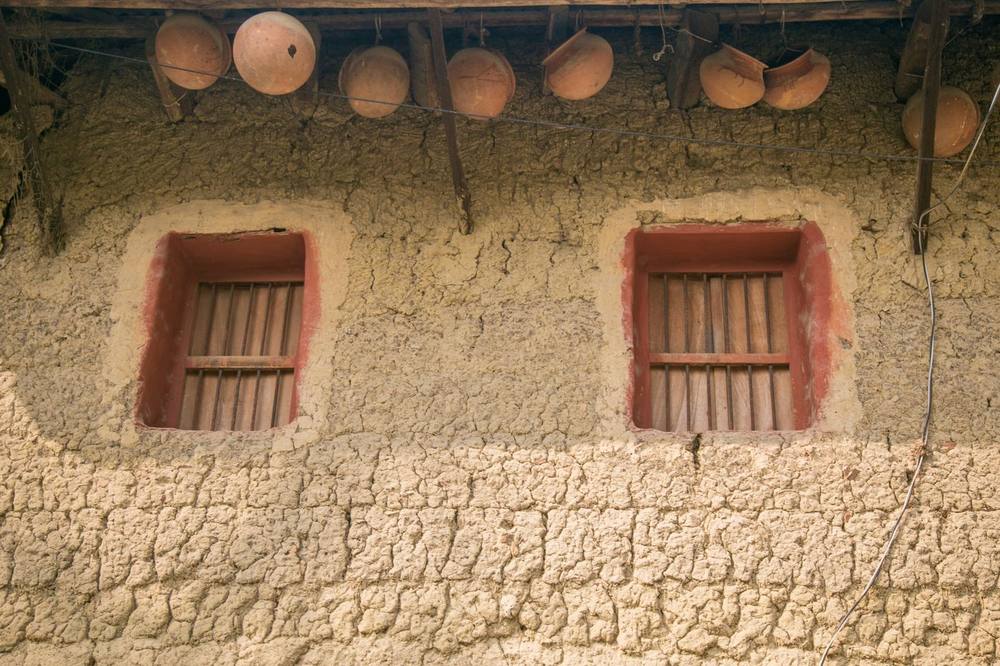
The paints were once made entirely from what was at hand:
- Red: red Barind soil washed in water, using the fine sediment that settles out (locally called "akhir").
- White: chalk clay or chalk powder, or soaked and ground sun-dried (atap) rice.
- To make it last: the pulp of old mango stones, taro (mankachu) and banana-tree sap, with dried jujube and red ochre, all soaked together for a few days.
These paints don't survive the rain for long, so many families now use shop-bought paint too. The walls, though, are still mud.
How it is painted
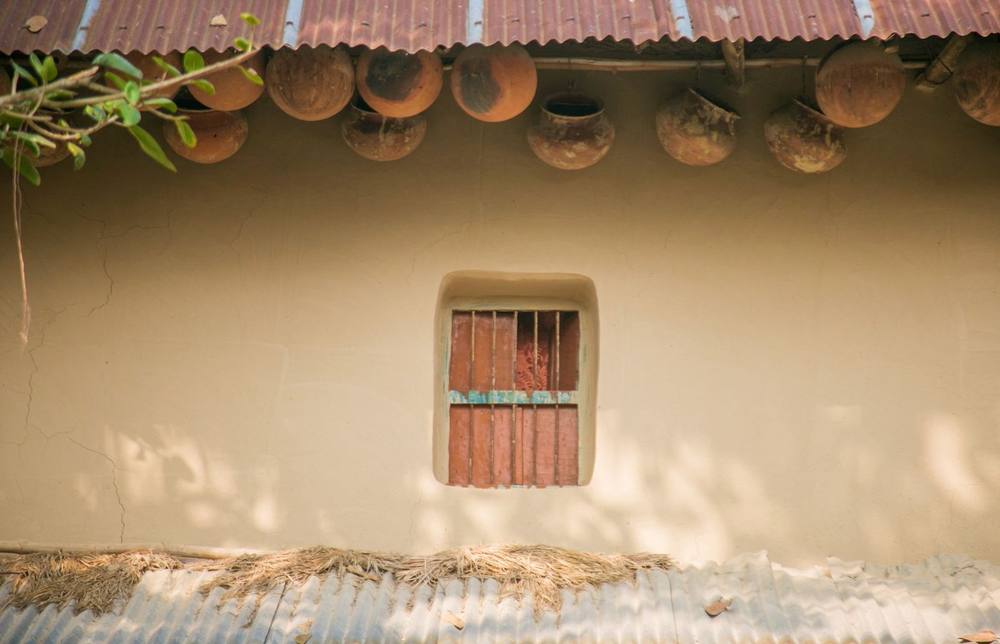
First the wall is smoothed with a coat of sticky clay. Once it dries, the design is sketched in chalk or pencil, then painted. By Daykhon Barman's reckoning, a medium-sized wall takes about fifteen days, or a month when fitted around housework. The monsoon dulls the colours, so when rain is coming many families cover their walls and courtyards with plastic sheets. When the paint fades, they either touch it up or paint a whole new design.
Festivals and the stories on the walls
Homes are repainted before Durga Puja, Lakshmi Puja, Kali Puja, Saraswati Puja, Nabanna (the harvest festival), Pohela Boishakh (Bengali New Year) and weddings. For Durga Puja the work has to be finished before Shashthi, the festival's first big day. The courtyard gets alpona too, and the tulsi altar a new design.
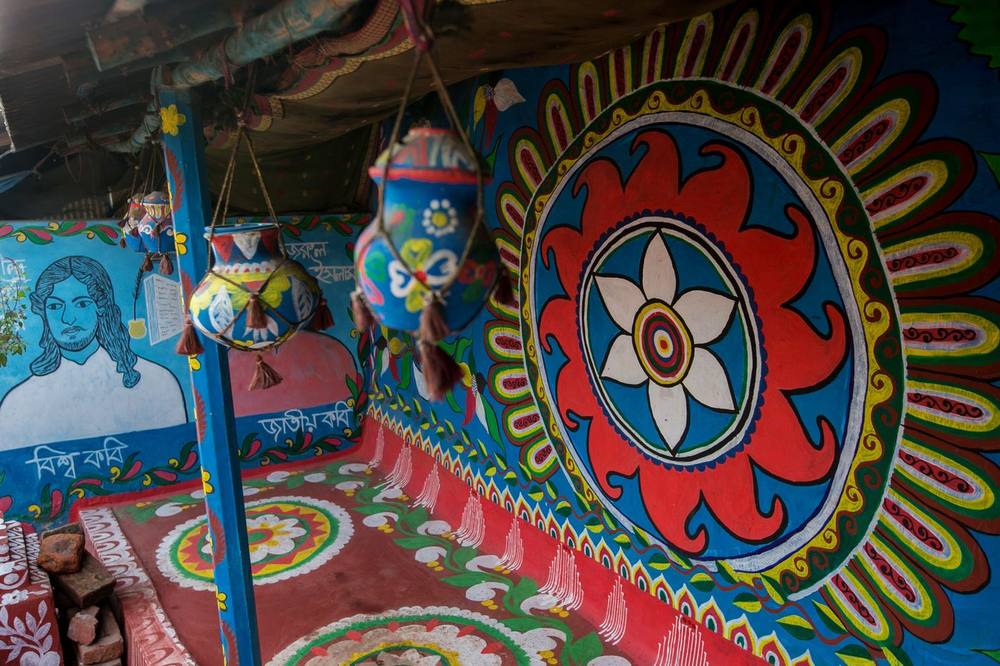
It isn't only flowers and birds. There are rivers and boats, village life, the Liberation War. One house shows Rabindranath Tagore ("Bishwakobi", the world poet) and Kazi Nazrul Islam ("Jatiyo Kobi", the national poet); another shows Nachole's own Ila Mitra.
One village, two communities side by side
Hindu and Muslim families in Tikoil live side by side and work together in the fields, markets and shops. Alpona is mainly a Hindu household tradition, but it is now the whole village's pride, and a few Muslim homes have been painted too. Visitors come from across Bangladesh and abroad, newlyweds come for photos, and films have been shot here. A villager, Dasu Barman, keeps a book in which visitors write their comments.
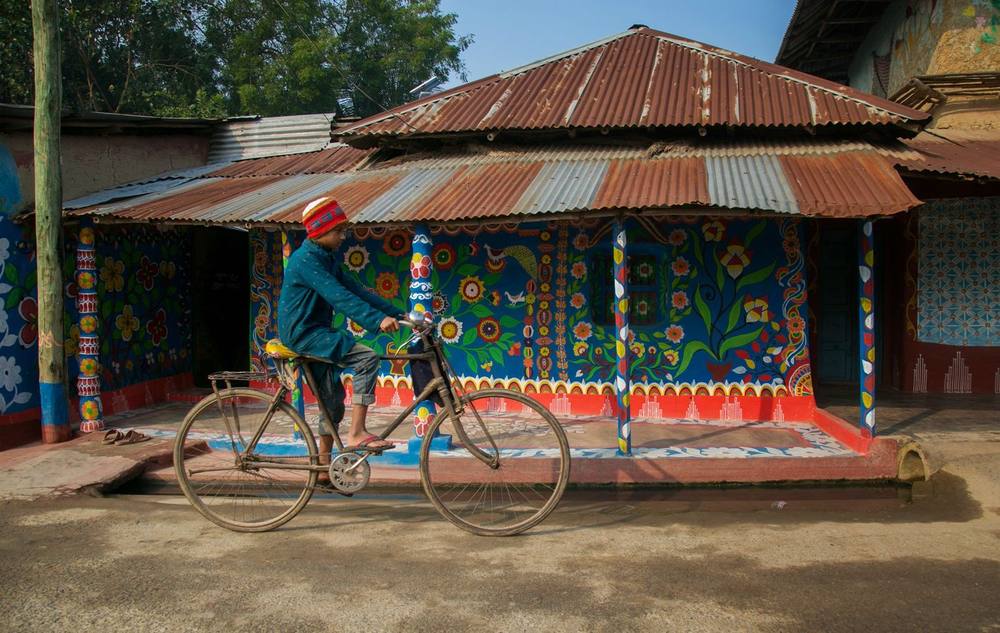
The district administration has repaired the village road and put up solar street lights, so the alpona can be seen after dark too.
Popular · Unseen ShopMaps of all 64 districtsA 3D relief map of every district: rivers, sights, neighbours and famous food. 128 maps in Bangla and English.See the maps →
The mud houses are changing
Alpona's real canvas is the mud house, and every year there are a few fewer of them as brick houses go up. Daykhon Barman herself accepts that mud houses may one day be gone. Her hope is that the village's women will keep the tradition alive by painting brick walls too.
Our video
We made a short documentary about the village, under two minutes, in Bangla: real photos of Tikoil, Daykhon Barman's story, what the paints are made of and how a wall is painted. The photos are from Wikimedia Commons, by Rayhan Ahmed and Shariful iea.
How to get there
- From Dhaka: take a bus or train to Chapainawabganj town, or go via Rajshahi. For train times and fares see our train schedule.
- From Chapainawabganj: a bus or CNG towards Nachole, then an auto-rickshaw via Hatbakoil bazaar to Tikoil. Ask locally for "Alpona gram" and anyone can point the way.
- Food and stay: there is nowhere to stay in the village; it is easiest to stay in Chapainawabganj town and visit for the day.
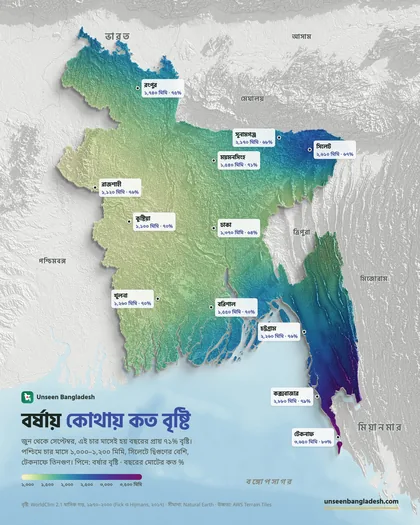
- When to go: the colours are brightest in winter and fade in the monsoon. Go just after a puja or Pohela Boishakh to see freshly painted alpona.
- Combine it with: Choto Sona Mosque, Tahkhana and Darasbari Mosque. For the whole district see our Chapainawabganj district guide.
Sources: The Daily Star (2016), Dhaka Times and TBS (2019), Samakal and Arab News (2021), The Daily Star Bangla (2021), The Financial Express (2023), Prothom Alo (2023) and Garland Magazine (2024).
Questions and answers
Where is the Alpona Village?
In Nejampur union of Nachole upazila, Chapainawabganj district. The village is called Tikoil and lies north of Hatbakoil bazaar.
Who started the alpona in Tikoil?
White and red alpona for pujas is an old tradition. Today's colourful flowers and birds were begun by Daykhon Barman after she came to the village as a bride about four decades ago; other women learned from her and painted their own homes.
What are the alpona paints made of?
Traditionally red soil, chalk clay, rice flour, mango-stone pulp, taro and banana-tree sap. Many families now also use shop-bought paint.
When is the best time to see the alpona?
In winter, and just after Durga Puja, Lakshmi Puja or Pohela Boishakh, when the houses are freshly painted. The colours are dull in the monsoon.
Can I stay in Tikoil?
No, there are no hotels in the village. Stay in Chapainawabganj town and visit for the day.
Full guides to the places in this post
See it on the map, plan your trip
Look up the places, routes and costs, then put your own trip together.