 Unseen Bangladesh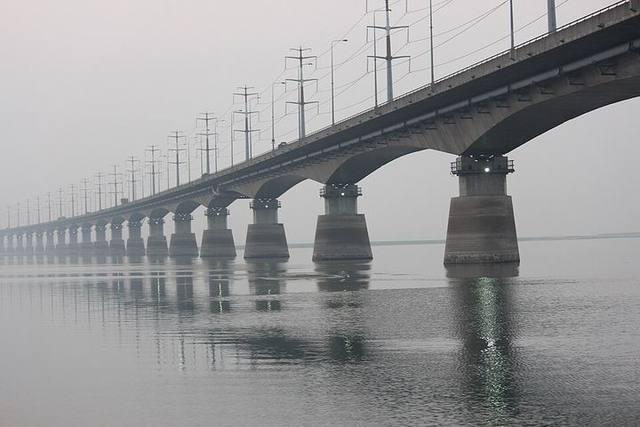
Sirajganj District · Rajshahi Division · যমুনা সেতু ও ইকো পার্ক
Jamuna Bridge and Eco Park travel guide
A bridge about 5 km long and a green eco park at its west end.
At a glance
- Length
- About 4.8 km
- Opened
- 23 June 1998
- Carries
- Road, rail, gas and power lines
- New railway bridge
- Jamuna Railway Bridge (opened 2025)
History and details
Linking the east and west of the country directly was a long-held dream. Construction of the Jamuna Multipurpose Bridge began in 1994 with the help of the World Bank, ADB and Japan, and it opened on 23 June 1998 (built as the Bangabandhu Bridge). When it opened it was one of the longest bridges in South Asia.
As well as road and rail, the bridge carries gas and power lines, which transformed North Bengal's economy. A separate Jamuna Railway Bridge was later built alongside for heavy trains.
At the bridge's west end in Sirajganj is the eco park, and at the east end in Tangail the Jamuna Resort and park. The long line of the bridge at sunset from the riverbank is worth seeing.
Things to do
- Spend an afternoon on the riverbank in the eco park
- Photograph the bridge at sunset
- Take a boat to a Jamuna char
How to get to Jamuna Bridge and Eco Park
By CNG from Sirajganj Road.
Sirajganj is about 140 km from Dhaka; the journey takes 3–3.5 hours.
- 🚌 By bus: North Bengal-bound buses from Mohakhali/Gabtoli to Sirajganj Road or town, fare ৳350–500.
- 🚆 By train: North Bengal-bound trains to Jamtail or Sirajganj.
Where to stay
- Jamuna Resort (east end, Tangail)
What to eat
Sirajganj yoghurt and ghee, Jamuna fish
Good to know
- Stopping on the bridge is not allowed
- Photograph the bridge at sunset from the riverbank
More to see nearby
- Jamuna Resort, east end (Tangail)
- Hatikumrul Nabaratna Temple (20 km)
- Hard Point, Sirajganj town (15 km)
More places to visit in Sirajganj district
- Rabindra Kachharibari, Shahzadpur — Rabindranath's estate office, now a museum.
- Hatikumrul Nabaratna Temple — An 18th-century nine-spired terracotta temple.