What Is Coral? Where to See Coral on Saint Martin's Island and How to Protect It
We call Saint Martin's the coral island, but what is coral? It looks like a rock, yet coral is a living animal. How coral lives, where its colour comes from, where to see it on Saint Martin's and how to protect it when you visit.

- What coral is
- A living animal (a colony of polyps), not a rock
- Colour comes from
- Algae living inside the coral
- Most coral on Saint Martin's
- South side, densest at the south-east tip
- Growth
- Many corals grow only 0.5–2 cm a year
- Rule
- Touching, taking or harming coral is banned
Trip ticket
Coral is not a rock or a plant: it is a living sea animal. Each coral is a colony of thousands of tiny animals called polyps, which take lime from seawater to build a hard skeleton. In Bangladesh, coral grows only around Saint Martin's Island, mostly on the south side of the island, in shallow water up to about 200 metres from the shore.
The Saint Martin's travel season has begun. We all know it as the "coral island", but few of us know what coral actually is. This post explains coral in plain words, where you can see it on Saint Martin's, and how to protect it when you visit.
What is coral: an animal, not a rock
Coral belongs to the cnidarian family of animals, the same group as jellyfish and sea anemones. A single coral is a colony of thousands of polyps. Each polyp is a small soft-bodied animal, many just a few millimetres long, with a ring of tentacles around its mouth that it uses to catch food.
The hard part we see as "rock" is really a skeleton. Polyps take calcium carbonate (limestone) from seawater and build a hard home underneath themselves. Over many years these skeletons build up into large corals and coral reefs.
Hard coral and soft coral
There are broadly two kinds of coral:
- Hard coral builds a hard limestone skeleton. The world's coral reefs are built by hard corals.
- Soft coral has no stony skeleton, so its body is soft and bendy. It sways in the current like a plant.
During the day, much of a coral's food comes from the algae living inside it. At night, many corals open their polyps, spread their tentacles and catch tiny floating animals (plankton). In a sense, coral turns hunter at night.
 Help your child know Bangladesh
through 3D infographicsWhat lies under Dhaka? What is inside the Sundarbans? It is all in the Bangladesh 3D Atlas, in Bangla and English.Free download →mapbangladesh.com
Where coral gets its colour
Inside each polyp live microscopic algae called zooxanthellae. The algae make food from sunlight and share it with the coral, and in return they get a safe home. Most of a coral's colour comes from these algae too.
What is coral bleaching
When the sea gets too warm, stressed corals push out the algae living inside them. Without the algae the coral turns white, which is called bleaching. A bleached coral is not dead straight away, but if the heat lasts too long it can starve and die.
Amazing coral facts
| Fact | What it means |
|---|---|
| Less than 1% of the sea floor | Coral reefs cover only a tiny part of the ocean floor |
| About 25% of marine life | Yet about a quarter of all sea creatures depend on coral reefs, which is why reefs are called the "rainforests of the sea" |
| 0.5–2 cm a year | Large rounded corals grow very slowly; a broken piece takes many years to grow back |
| One night of spawning | Many corals release eggs and sperm together on a particular night of the year, often around a full moon |
Where to see coral on Saint Martin's Island
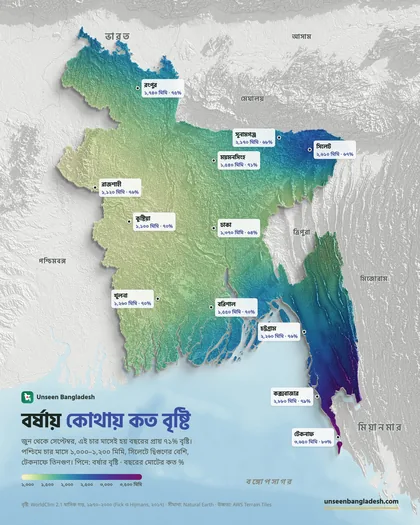
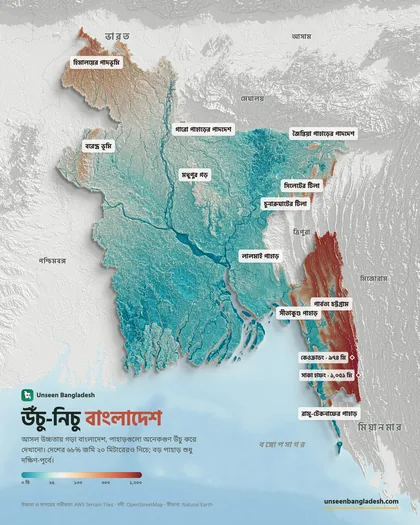
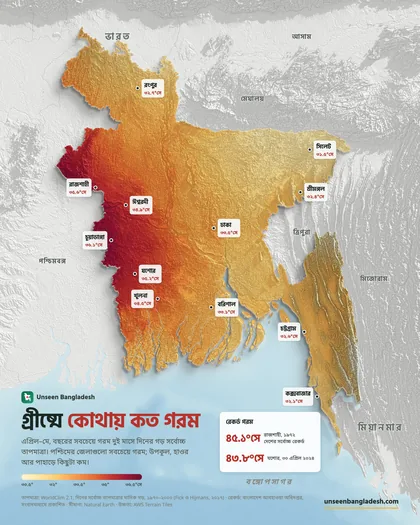
Saint Martin's is Bangladesh's only coral island, in the Bay of Bengal south of Teknaf in Cox's Bazar district. But there is no giant reef here like in Australia. Murky water and silt carried by rivers have kept a true reef from forming. What the island has are shallow-water coral communities growing on the rocks along the shore.
- The south side: coral is denser and more varied on the southern part of the island, and most abundant at the south-east tip.
- Shallow water around the island: coral grows in shallow water up to about 200 metres from the shore.
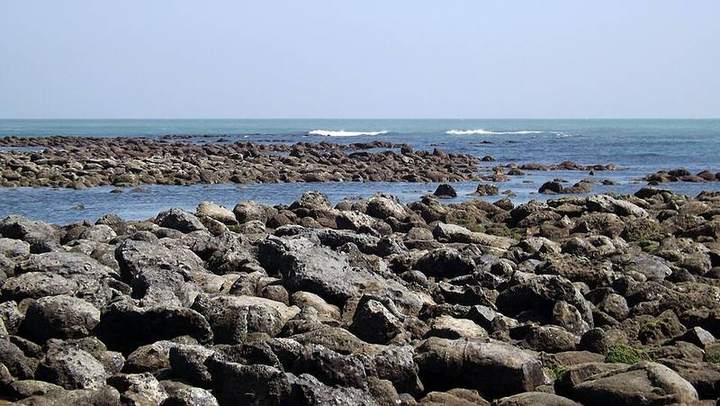
- At low tide: when the water drops, you can see living coral in small pools between the shore rocks. This is the easiest way for an ordinary visitor to see coral.
- Chhera Island: the small piece of land to the south, ringed with rock and coral. It is the most sensitive area; permission and rules for visiting change by season, so check locally.
The oldest fossil coral found on the island is about 33,000 years old by carbon-14 dating. Many of the white and grey coral pieces you see on the beach are skeletons of dead coral.
How to protect coral when you visit
Saint Martin's has been an Ecologically Critical Area (ECA) since 1999. Under the Ministry of Environment's notice of 22 October 2025, harming coral, snails, shells or any marine life is banned, and that notice still applies in the 2026-27 season. Take photos with the coral and keep the memories, but do not damage it:
- Don't touch: even a touch can injure the soft polyps.
- Don't step on it: walk carefully over the rocks at low tide and never stand on living coral.
- Don't take or buy coral: even if you see coral or shell souvenirs in shops, don't buy them. Take home only photos.
- Don't drop plastic: plastic and rubbish in the water harm coral and fish. Carry your waste back with you.
Sources: NOAA Ocean Service (what corals are, how they feed, bleaching, growth and reproduction); Marine Biodiversity of Bangladesh (marinebiodiversity.org.bd); Banglapedia, St Martin's Island; Ministry of Environment, Forest and Climate Change notices (22 October 2025 and 25 October 2026).
 Book Saint Martin's resorts and ship tickets on GoZayaanBook now →
Questions and answers
Is coral an animal or a plant?
Coral is an animal. Each coral is a colony of thousands of tiny polyps, relatives of jellyfish. Many people think it is a plant because algae live inside it.
Why is Saint Martin's called a coral island?
Living coral grows in the shallow water around the island and on its shore rocks, and dead coral skeletons are scattered along the beaches. In Bangladesh, coral is found only here.
Where can I see coral on Saint Martin's Island?
Coral is most common on the south side of the island and most abundant at the south-east tip. At low tide, living coral is easy to spot in small pools between the shore rocks.
Does Saint Martin's Island have a coral reef?
No, it has no true coral reef. Murky water and river silt have kept a reef from forming; instead there are shallow-water coral communities growing on the shore rocks.
Why does coral turn white?
When the water gets too warm, coral pushes out the coloured algae inside it and its white skeleton shows through. This is called bleaching; if the heat lasts too long the coral can die.
Is it illegal to take coral from Saint Martin's?
Yes. Under the government notice, harming coral, snails, shells or any marine life is banned. Don't take or buy coral; bring back only photos.
Full guides to the places in this post
See it on the map, plan your trip
Look up the places, routes and costs, then put your own trip together.